TL;DR
- 01Reader-first tone means your cover letter is built around the employer's needs, not your need to tell your whole story. It sounds clear, useful, and respectful of the reader's time.
- 02A simple way to do it:
- 03Start with the role and why you fit it
- 04Name the kind of work the team needs help with
- 05Back that up with one or two relevant examples
- 06Keep paragraphs short and easy to scan
- 07Cut lines that are vague, dramatic, or mostly about what you want
- 08If a sentence does not help the reader understand your fit, rewrite it or remove it.
What reader-first tone actually means
A lot of cover letters sound self-focused without meaning to. They open with broad statements like "I am excited to apply" or "I have always been passionate about this field." Those lines are not wrong, but they do not help a hiring manager make a decision.
Reader-first tone shifts the focus. It asks: what does this person need to know in the first few seconds? Usually, the answer is simple:
- What role are you applying for?
- Why are you a strong match?
- What evidence supports that?
- Why should they keep reading?
That does not mean your letter should sound cold or robotic. It should still sound human. The difference is that your personality shows up through judgment, clarity, and relevance, not through filler.
Here is the easiest test: read each sentence and ask, "Does this help the reader understand why I fit this job?" If yes, keep it. If not, cut it.
Reader-first tone also avoids making the employer do extra work. That means fewer long intros, fewer repeated resume details, and fewer claims without examples. You are guiding the reader toward a quick, confident yes.
Why it matters in a cover letter
A cover letter has one main job: add context that helps your application make sense fast. That is why tone matters.
When your tone is reader-first, you come across as more credible. You sound like someone who understands the role, sees what matters, and can communicate clearly. Those are helpful signals in many roles.
It also helps you avoid two common problems:
First, sounding generic. A generic letter could be sent to any company. A reader-first letter reflects the actual job in front of you.
Second, sounding too self-promotional. You do need to present your strengths, but strong cover letters do not demand attention. They earn it by being specific.
When your cover letter uses the same core language as the job posting, your application materials feel more consistent. That can make it easier for a human reader to connect your resume, letter, and target role.
Think of it this way: your resume lists evidence. Your cover letter explains why that evidence matters here.
How to write in a reader-first tone
Start by pulling out two or three real needs from the job description. Not every bullet point. Just the priorities that seem central to the role.
Then build your letter around those needs.
A simple structure looks like this:
Opening: Name the role and your strongest relevant fit.
Instead of: "I am writing to express my interest in the Marketing Manager position."
Try: "I am applying for the Marketing Manager role with experience leading campaign strategy, content planning, and cross-functional launches for growing teams."
The second version gives the reader usable information right away.
Middle: Connect your experience to the team's likely goals.
You do not need to cover everything. Pick one or two points that matter most.
For example:
- If the role needs client communication, show that you manage expectations clearly
- If it needs process improvement, show where you made work faster or cleaner
- If it needs writing, analysis, or coordination, give one concrete example
Close: End with calm confidence.
Do not overreach. You do not need lines like "I know I would be a perfect fit" or "I am the best candidate." A stronger close sounds like this: you are interested, your background aligns, and you would welcome the chance to discuss how you can help.
As you revise, watch for these reader-first habits:
- Use plain language instead of inflated language
- Keep sentences focused on one idea
- Put proof near each claim
- Mirror relevant job keywords naturally
- Keep the letter tight, usually 3 to 5 short paragraphs
If you want a useful cross-check, compare your letter against your resume using this Resume audit checklist.
Quick before-and-after examples
Here are a few common lines that can become more reader-first with a small shift.
Before: "I am a highly motivated professional with a proven track record of success."
After: "In my last operations role, I improved reporting workflows and reduced weekly manual work for the team."
Why it works: the second line gives evidence instead of a label.
Before: "I have always wanted to work for a company like yours because your mission inspires me."
After: "Your posting's focus on customer retention stood out to me because my recent work centered on improving client follow-through and renewal communication."
Why it works: it connects admiration to relevant work.
Before: "I believe my background would make me an excellent candidate for this position."
After: "My background in stakeholder communication and deadline-driven project support matches the core needs described in the role."
Why it works: it is specific, grounded, and easier to trust.
You do not need to strip out every use of "I." The goal is not to avoid first person. The goal is to make sure your sentences keep returning to the employer's questions.
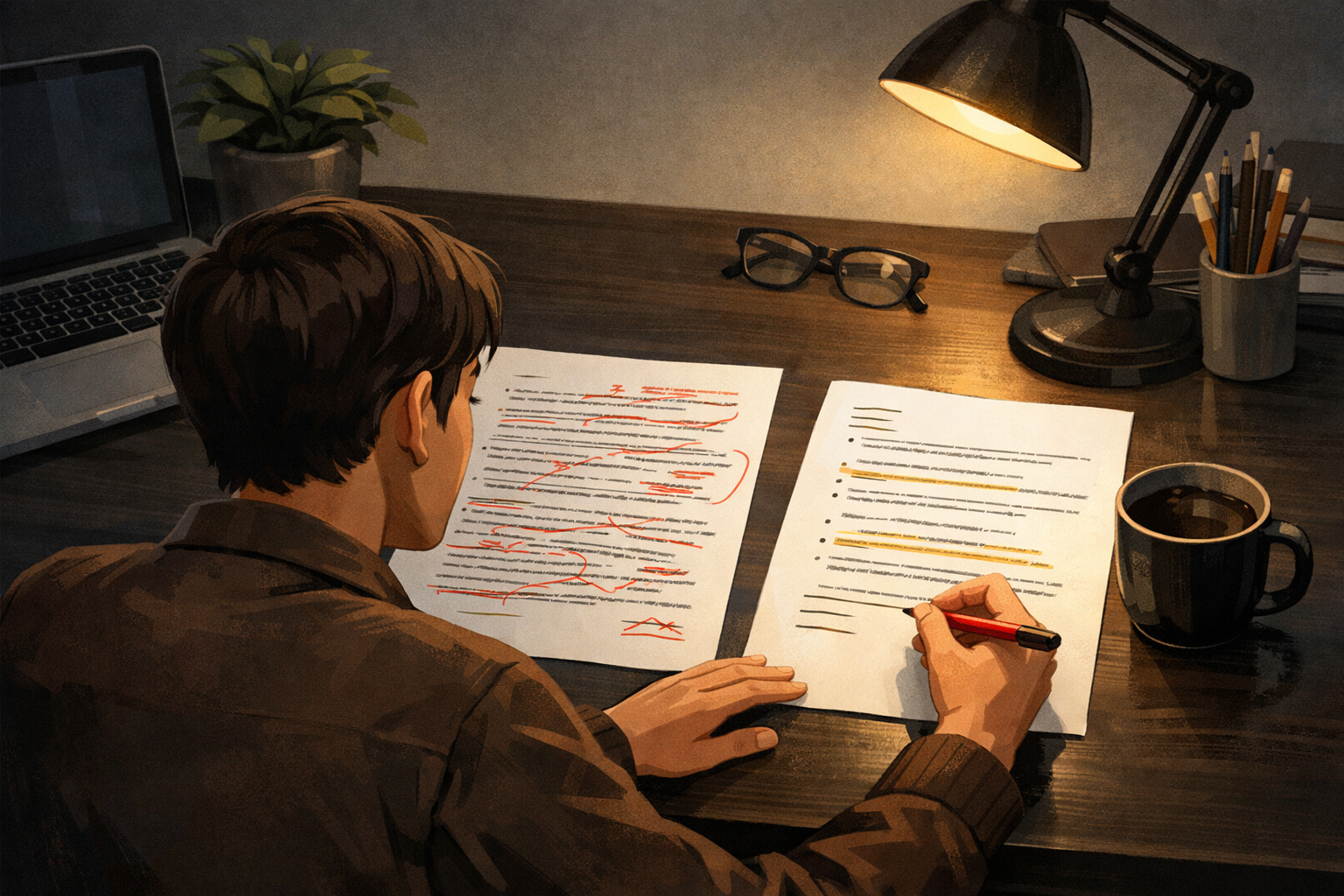
A helpful editing move is to look at your first paragraph only. If it mostly talks about your enthusiasm, rewrite it until it gives the reader a reason to continue.
Conclusion
Reader-first tone is not about sounding formal. It is about being useful. When your cover letter makes the reader's job easier, your case gets stronger.
Start with what matters to the employer, support it with proof, and keep your message easy to scan. If you want help tightening the rest of your application, you can Start my resume or Browse the blog for more practical guidance.
FAQ
Short answers for the next obvious questions
What is reader-first tone in a cover letter?
It is a writing approach that focuses on what the employer needs to know first, then connects your experience to those needs.
Does reader-first tone mean I should not talk about myself?
No. You should still talk about your experience, but in a way that shows why it matters to the reader.
How do I know if my tone is too self-focused?
If your opening paragraph is mostly about your excitement or goals, it probably needs more relevance and proof.